
Part Three of the Steady in the Seasons series
“Be still before the Lord and wait patiently for him.”
Psalm 37:7
Be still.
Be stll is one of the most frequently read phrases in the Bible. Yet, we tend to not really practice “being still” when life is happening around us. We become focused on what happened yesterday, last week, or last year all while we are not looking at what God wants us to do next.
We need to remember there is a space between releasing what was and stepping into what comes next.
It is the in-between.
The former season has ended, or perhaps we know it is ending, but the next one has not fully begun. We have surrendered the plan, role, expectation, or burden we were carrying. Now, we are waiting for God to reveal what follows.
This space can feel strangely empty.
We may have expected immediate clarity after surrender. We released what God asked us to place in His hands, so we assumed the next direction would quickly appear. Instead, we find ourselves standing between a closed door and one that has not opened. The in-between can make us wonder whether we misunderstood God, missed a step, or somehow became stuck.
Yet, waiting does not mean God has stopped working.
The Space Between Release and Direction
Waiting is easier when we know exactly how long it will last, especially if it is a short time of waiting.
We can prepare for a season with an ending date. We can count the days, mark progress, and reassure ourselves that relief is coming.
The in-between rarely offers that certainty.
We do not know when the answer will come. We cannot see how the pieces will fit together. We may not even know what we are waiting for, only that God has not yet shown us the next step.
Habakkuk 2:3 says:
“For the revelation awaits an appointed time; it speaks of the end and will not prove false. Though it linger, wait for it.”
“Though it linger” acknowledges something we sometimes hesitate to admit: God’s answer may feel delayed from our perspective.
We have our own ideas about when something should happen. We decide how long should be enough time for healing, direction, provision, or change. When that time passes without an answer, waiting can begin to feel like abandonment.
But God’s timing is not careless. Sometimes we probably do not even need to have any sort of answer or piece to the puzzle because that might be a distraction in keeping us from focusing on what God is doing for and through us.
The answer has not been forgotten simply because it has not arrived.
Waiting Is Not Wasted Time
We often measure progress by what we can see.
A completed goal.
An answered prayer.
A new opportunity.
A clear direction.
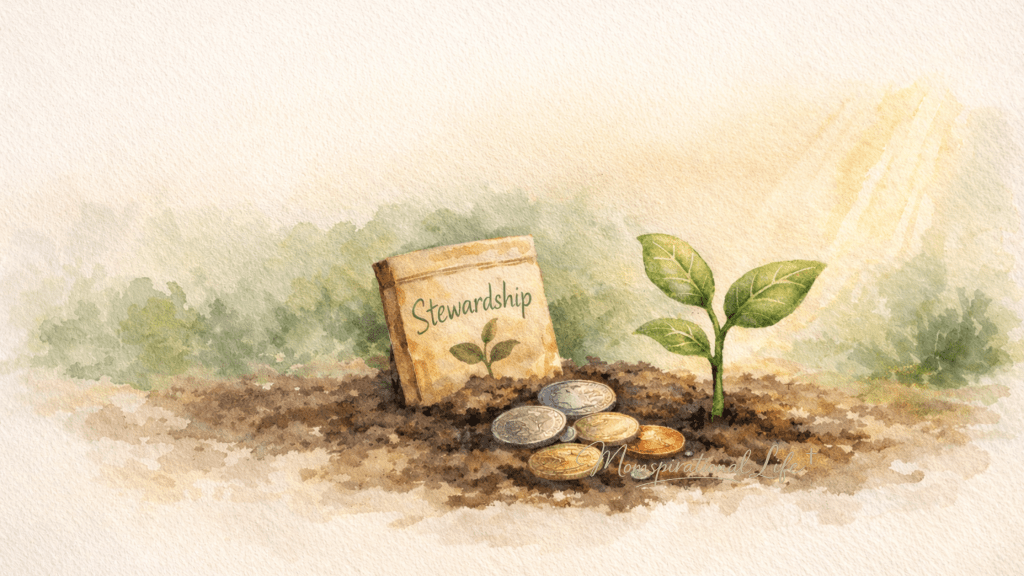
The in-between may offer none of these. From the outside, it can look as though nothing is happening. However, some of God’s deepest work happens where progress is not immediately visible. A seed beneath the soil does not appear productive. It looks buried. Yet, roots are forming in the darkness before anything breaks through the surface.
Our waiting seasons can look similar.
God may be strengthening our trust before revealing the destination. He may be loosening our attachment to a particular outcome. He may be preparing circumstances, people, or opportunities that we cannot yet see.
He may be…
The absence of visible movement is not the absence of God.
Waiting Requires Strength
Isaiah 40:31 says:
“But those who hope in the Lord will renew their strength.”
Waiting is sometimes described as though it is passive. We picture someone sitting quietly until life begins moving again.
However, waiting on God requires strength. It takes strength to continue praying when the answer has not come. It takes strength to remain faithful when our efforts do not appear to be producing anything. It takes strength to resist forcing an outcome simply because uncertainty has become uncomfortable.
Waiting can make us tired because we are carrying questions without knowing when they will be answered. Yet, Isaiah does not tell us to manufacture more strength for ourselves. It tells us where renewed strength is found.
Our strength is renewed through hope in the Lord.
Not hope in a deadline.
Not hope in one expected outcome.
Not hope in our ability to control what happens next.
Our hope rests in the character of God.
When Silence Feels Like Absence
Psalm 130:5 says:
“I wait for the Lord, my whole being waits, and in his word I put my hope.”
There are seasons when God seems quiet. We pray, read Scripture, and look for direction, but nothing feels clear. Silence can make us question whether God is listening. Yet, silence is not the same as absence.
God does not disappear when we cannot sense His movement. He is not less present because we do not have an answer. The same God who speaks through unmistakable moments also works quietly in places we may only recognize later.
During those times, His Word becomes an anchor. Our emotions may change from one day to the next. One morning we may feel peaceful, and by evening we may be questioning everything again. God’s truth does not change with those emotions.
When we do not have new instructions, we can remain faithful to what He has already shown us.
We can continue loving our families.
We can continue caring for what He has placed in front of us.
We can continue praying, serving, resting, and trusting.
Sometimes faithfulness in the in-between looks ordinary. That does not make it insignificant.
Patience Is Hope That Continues
Romans 8:25 says:
“But if we hope for what we do not yet have, we wait for it patiently.”
Patience does not mean we never feel frustrated, discouraged, or tired. It means those feelings do not become the foundation of our decisions. Impatience often tempts us to create our own answer. Especially that. We may return to something (or someone) God asked us to release, accept an opportunity that is not right, or rush into a decision simply because movement feels better than waiting.
But, not every open path is God’s direction.
Sometimes the faithful choice is to remain where we are until He makes the next step clear. That requires patience, but patience is not empty resignation. It is hope that continues to trust while the answer remains unseen.
Hold On to What God Promised
Hebrews 10:23 tells us:
“Let us hold unswervingly to the hope we profess, for he who promised is faithful.”
The strength of a promise rests in the character of the one who made it.
If our hope depended upon our ability to predict the future, we would have reason to fear. If it depended upon circumstances remaining comfortable, it would quickly become unstable.
Our hope is secure because God is faithful.
He has not asked us to hold on because the in-between will always be short or easy. He asks us to hold on because He can be trusted within it.
We may not know what the next season will look like. We may not understand why the answer has taken longer than expected. We may not see evidence that anything is changing.
Still, we can hold on.
What to Do in the In-Between
Perhaps you are waiting today. You released something, but you do not yet know what will take its place. You have prayed for direction, but the path remains unclear. You believe God is working, yet you wish you could see some evidence of it.
You do not have to force your way out of the in-between. Be still before God, even when your thoughts are restless. Return to His Word when your feelings become uncertain. Continue caring for what He has already placed in your hands. Allow Him to renew your strength instead of exhausting yourself by trying to control the timing.
Waiting is not a pause in God’s plan. It can be part of the plan itself. The in-between may feel empty, but it is not without purpose.
God is present in the waiting, working in the silence, and is faithful before the answer arrives.
Where are you currently waiting for God, and what truth about His character can help you remain faithful in the in-between?
With love,
Tabitha






Leave a Reply